Beyond the Fjords: Where Locals Work, Shop, and Live in Stavanger
Ever wondered what life feels like beyond the tourist postcards? I recently wandered through Stavanger’s quiet streets and stumbled upon something unexpected—not another scenic viewpoint, but the city’s real pulse. Forget the cruise ship crowds; the true character of this Norwegian gem beats in its unassuming business districts, where daily life unfolds with quiet charm. This is where commerce meets culture, and authenticity isn’t staged—it’s lived. While visitors flock to Lysefjord and the white-painted wooden houses of Gamle Stavanger, the rhythm of modern Norwegian life plays out in office lobbies, sidewalk cafés, and mid-morning commutes. To understand Stavanger not just as a destination but as a home, one must step off the guided path and into the spaces where people work, shop, and live every day.
Reimagining Stavanger: More Than a Tourist Stop
Stavanger is often introduced through a well-worn set of postcard images: dramatic fjords carved by glaciers, the iconic Pulpit Rock rising above deep blue waters, and a beautifully preserved 18th-century town with cobblestone lanes and flower-box windows. It is also widely recognized as Norway’s oil capital, home to major energy companies and a hub of innovation in offshore technology. These identities—natural wonder and industrial strength—are real, but they only tell part of the story. Beneath the surface of its global reputation lies a city shaped by routine, by the quiet consistency of daily work, and by urban spaces designed not for spectacle but for function.
The contrast between tourist expectations and lived reality is especially clear in Stavanger’s central business areas. While visitors pause for photos at the harbor or board ferries to Preikestolen, locals are already at their desks, walking to meetings, or picking up coffee before the morning commute. These moments, though ordinary, reveal a deeper truth about Norwegian urban life: that dignity, purpose, and beauty can coexist in the practical spaces of everyday existence. The city’s commercial zones are not sterile or soulless—they are thoughtfully designed, human-scaled, and deeply integrated into the social fabric.
What makes these areas worth exploring is not just their economic role but their cultural significance. Commercial districts in Stavanger are not isolated zones for business; they are places where community life happens. People gather during lunch breaks, children walk to school through office neighborhoods, and public spaces double as venues for informal gatherings. By focusing on these areas, travelers gain a more complete picture of Norwegian values—order, sustainability, and a strong sense of shared responsibility. Rather than treating cities as collections of attractions, we begin to see them as living systems, shaped by the people who inhabit them.
The Heartbeat of the City: Østlendingen and Sentrum Business Hubs
If Stavanger has a professional core, it lies in two key districts: Sentrum, the central business zone, and Østlendingen, a growing hub just east of the city center. Unlike the high-rise skylines of global financial capitals, these areas reflect a distinctly Scandinavian approach to urban development—low-rise, human-centered, and visually harmonious. Buildings here blend modern glass facades with restored brick structures, creating a streetscape that feels both contemporary and grounded in history. There are no towering office complexes, but rather clusters of three- to six-story buildings connected by wide sidewalks, bike lanes, and small green plazas.
Sentrum functions as the administrative and commercial nucleus of the city. It houses regional branches of national banks, legal firms, municipal offices, and energy sector support services. The foot traffic is steady but never overwhelming, with a rhythm that prioritizes efficiency without sacrificing calm. Office workers move with purpose, yet there is no sense of urgency or stress. The design of the space encourages this balance—wide streets reduce congestion, natural light floods into workspaces, and noise levels remain low due to thoughtful zoning and building insulation.
Østlendingen, meanwhile, represents a newer model of integrated urban development. Originally an industrial area, it has been transformed into a mixed-use neighborhood where offices, research centers, and light manufacturing coexist with green spaces and residential buildings. This district is home to several tech startups and environmental innovation labs, reflecting Norway’s growing emphasis on sustainable technology. The architecture here leans toward minimalist modernism—clean lines, neutral tones, and energy-efficient materials—yet the area still feels warm and accessible. Public seating, bike repair stations, and small kiosks make it easy for workers to take breaks outdoors, reinforcing the Norwegian value of connecting with nature even in urban settings.
Local Life in Motion: Cafés, Convenience, and Commuting
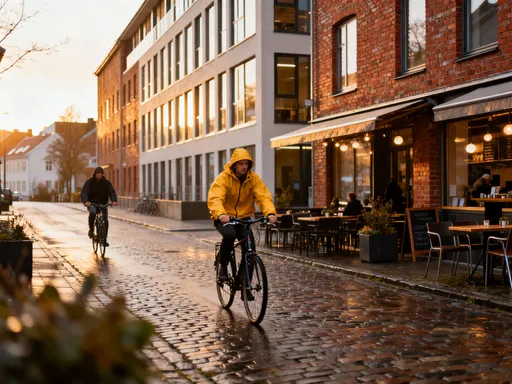
The life of Stavanger’s business districts becomes most visible in the morning hours, between 8:30 and 9:00 a.m. This is when the city awakens not with tour buses, but with bicycles. Commuters glide through dedicated bike lanes, many wearing practical rain gear and carrying backpacks or briefcases. Public transit, including electric buses and regional trains, runs on time and with quiet efficiency. Parking exists, but it is limited and often underground, encouraging alternative transportation. The city’s infrastructure makes it easy to live without a car, a reality that many residents embrace for both convenience and environmental reasons.
Supporting this daily rhythm is a network of small businesses that form the micro-economy of the commercial zones. Coffee kiosks open early, serving strong Norwegian brew in reusable cups. Bakeries offer fresh rye bread, cinnamon rolls, and open-faced sandwiches wrapped in paper. Lunch spots—ranging from casual salad bars to family-run eateries—prepare meals made with local ingredients. These establishments are not tourist-oriented; they cater to office workers who value speed, quality, and simplicity. A lunch break here might include a 20-minute walk along a tree-lined path or a brief meeting held outdoors, weather permitting.
What stands out is the emphasis on balance. Workdays in Stavanger typically end by 4:30 or 5:00 p.m., allowing time for family, hobbies, and outdoor activities. Even during busy periods, the pace remains measured. Employees take short, frequent breaks, often stepping outside to breathe fresh air or chat with colleagues. Natural light is prioritized in office design, with large windows and open floor plans. This attention to well-being is not an afterthought—it is embedded in the culture. The result is a work environment that supports productivity without burnout, reflecting broader national values of sustainability, fairness, and long-term quality of life.
Design with Purpose: Urban Planning That Serves People
One of the most striking aspects of Stavanger’s business districts is how intentionally they are designed. Every element—from sidewalk width to building height—serves a purpose. The city’s planners have prioritized walkability, ensuring that most offices, shops, and transit points are within a 10- to 15-minute walk of each other. This reduces reliance on cars, lowers emissions, and fosters a sense of community. Pedestrian zones are common, especially in Sentrum, where vehicle access is restricted during peak hours.
Green spaces are integrated throughout. Small parks, tree-lined avenues, and rooftop gardens provide moments of calm amid the workday. These areas are not decorative; they are functional, offering shade, reducing noise pollution, and improving air quality. Public art is also present, though subtly—sculptures near building entrances, murals on side walls, and seasonal installations in plazas. These touches add character without overwhelming the space, reinforcing the idea that beauty and utility can coexist.
Compared to high-density cities like London or Tokyo, Stavanger’s low-rise commercial zones feel less stressful and more navigable. There is no sense of being dwarfed by buildings or lost in crowds. The scale is human, the pace is manageable. Zoning regulations ensure that residential neighborhoods remain close to business areas, reducing commute times and strengthening neighborhood identity. At the same time, there is a clear distinction between zones—offices do not encroach on homes, and noise-sensitive areas are protected. This balance allows the city to function efficiently while preserving the quality of life for its residents.
Hidden in Plain Sight: The Cultural Soul of Commercial Streets
It would be easy to assume that culture in Stavanger is confined to museums, theaters, and historic sites. But a closer look reveals that cultural life thrives within the commercial districts themselves. In office buildings and business plazas, small galleries display local artists’ work. Independent bookshops stock Norwegian literature and design journals. Community boards list upcoming events—lunchtime concerts, photography exhibitions, language exchange meetups. These activities are not fringe occurrences; they are part of the urban rhythm.
Some companies sponsor public lectures or host open workshops on topics like climate innovation, urban gardening, or digital literacy. Others partner with local artists to install temporary exhibits in their lobbies. During summer months, pop-up markets appear in courtyards, selling handmade goods, organic food, and crafts. These events draw both workers and nearby residents, turning commercial spaces into social hubs. The atmosphere is informal, inclusive, and unhurried—there is no pressure to buy or perform, only to participate.
This integration of culture into everyday spaces reflects a broader Norwegian belief: that art and ideas should be accessible, not reserved for elite institutions. It also challenges the notion that business districts are culturally barren. In Stavanger, the line between work and culture is blurred in the best possible way. A lawyer might attend a poetry reading during lunch, a software developer might browse a photography exhibit between meetings, and a teacher might pick up a novel from a sidewalk bookstand. These small moments accumulate into a rich, lived experience that cannot be replicated in a guided tour.
A Different Kind of Shopping: Practicality Meets Aesthetic
Shopping in Stavanger’s business districts looks nothing like the souvenir-lined alleys near the harbor. Here, retail is functional, thoughtful, and deeply tied to daily life. Stationery stores stock high-quality notebooks, pens, and eco-friendly office supplies. Uniform suppliers cater to healthcare workers, technicians, and service staff, offering durable, well-designed clothing. Tech outlets sell laptops, headphones, and accessories, often with repair services available on-site. These shops are not flashy, but they are well-maintained and staffed by knowledgeable professionals who take pride in their work.
What locals buy reflects their values: durability, simplicity, and sustainability. Reusable packaging is standard. Many stores offer repair options rather than replacement, extending the life of products. Waste is minimized through careful packaging and recycling programs. There is little emphasis on fast fashion or disposable goods. Instead, consumers invest in items that last, whether it’s a well-made coat, a reliable backpack, or a high-performance laptop.
This approach to commerce supports long-term living rather than short-term tourism. It reflects a mindset that prioritizes responsibility over convenience, quality over quantity. Even in small ways—such as a coffee shop offering discounts for bringing your own cup or a stationery store using recycled paper—ethical choices are embedded in daily transactions. For visitors, observing this side of Stavanger offers a powerful lesson: that a city’s values are revealed not in its monuments, but in its markets.
Why This Matters: Rethinking Travel Through Urban Realities
Travel is often framed as a quest for beauty, adventure, or escape. But it can also be an act of understanding. To truly know a place, one must look beyond the postcard views and engage with its everyday spaces. In Stavanger, the quiet office street, the morning commute, the lunchtime café—these are not background noise. They are the heartbeat of the city. They reveal how people live, what they value, and how their environment shapes their lives.
Exploring business districts does not diminish the awe inspired by the fjords; it deepens it. The same culture that preserves Norway’s natural landscapes also designs its cities with care, efficiency, and humanity. The innovation seen in offshore energy is mirrored in sustainable urban planning. The respect for nature extends into the workplace, where natural light, outdoor breaks, and green spaces are not luxuries but expectations. By visiting these professional zones, travelers gain a more complete, more authentic understanding of Norwegian life.
This shift in perspective matters. It encourages us to see cities not as checklists of attractions, but as living, evolving systems. It invites us to slow down, observe, and connect. It reminds us that culture is not something to be consumed, but something to be experienced—in the rhythm of a workday, the design of a sidewalk, the quiet dignity of a well-organized city. The next time you visit Stavanger, step away from the harbor. Walk through Sentrum, pause in Østlendingen, and let the ordinary moments speak. You may find that the quiet office street tells you more about Norway than any fjord view ever could.