Pamukkale Unfiltered: What No One Tells You About Turkey’s Cotton Castles
Nestled in southwestern Turkey, Pamukkale’s terraced pools of travertine and turquoise water look like something from a dream. I walked these mineral cliffs myself, and let me tell you—photos don’t do it justice. More than just a pretty view, this UNESCO site blends natural wonder with ancient history, from Roman baths to crumbling temples. If you’re planning a visit, knowing *how* to experience it—without the crowds, with comfort, and with meaning—changes everything. This is not merely a destination for the camera; it’s a place that speaks to the soul, where earth’s quiet forces have sculpted a landscape that feels both surreal and sacred. Understanding how to move through it thoughtfully makes all the difference.
First Impressions: Stepping Into a Natural Wonderland
The first glimpse of Pamukkale takes your breath away. As you approach the site from Denizli, the flat Anatolian plateau suddenly gives way to a surreal vision: a gleaming white mountain cascading with shimmering blue pools, like frozen waves of an alien sea. The contrast is striking—dry, sunbaked earth meets a luminous cascade of mineral-rich waters, formed over millennia by the slow drip of thermal springs. These travertine terraces are not painted or staged; they are the real-time work of nature, where calcium carbonate deposits build layer upon layer, creating natural dams and basins that fill with crystal-clear water.
The science behind this phenomenon is as fascinating as the scenery. Hot water from deep underground—originating from volcanic activity—rises through limestone layers, dissolving calcium bicarbonate along the way. When it surfaces, carbon dioxide escapes into the air, causing the calcium carbonate to solidify and form travertine. Over time, this process builds the soft, chalk-like terraces that define Pamukkale, a name that literally means “Cotton Castle” in Turkish. The water temperature ranges from warm to hot, averaging between 35°C and 100°C at the source, though it cools as it flows down the terraces, making some pools comfortable for wading.
Visitors typically enter through the main gate near the town of Pamukkale, where a short walk leads to the base of the terraces. From there, you can choose to walk up the travertine steps or take a brief shuttle ride to the upper levels. The climb, though gentle, rewards with panoramic views. Early morning light enhances the surreal quality, casting soft gold over the white cliffs and turning the water into liquid sapphire. The silence, broken only by the trickle of water and distant voices, adds to the sense of stepping into another world. This is not just a geological marvel—it feels like a sanctuary carved by time and water.
Hierapolis Rising: Where Ruins Meet Revelation
Perched directly above the travertine pools lies the ancient city of Hierapolis, a place where history and healing converged. Founded in the 2nd century BCE by the Attalid kings of Pergamon, Hierapolis was built as a spa town, drawing visitors from across the Roman world who came to bathe in the therapeutic waters. The city flourished under Roman rule, becoming a center of health, culture, and spirituality. Today, its ruins stand as a testament to a civilization that understood the power of nature long before modern science could explain it.
Among the most impressive structures is the well-preserved Greco-Roman theater, nestled into the hillside with commanding views of the valley below. Built during the reign of Emperor Severus in the 2nd century CE, it once seated over 15,000 spectators and hosted performances, political gatherings, and religious ceremonies. Walking through its vaulted passageways and ascending the stone tiers, one can almost hear the echoes of applause and debate. The acoustics remain remarkable—speakers could be heard clearly from the top row, a feat of ancient engineering that continues to impress.
Just beyond the theater lies the necropolis, one of the largest in Asia Minor, stretching over two kilometers and containing thousands of tombs. These range from modest family plots to elaborate sarcophagi and monumental tombs, reflecting the diverse social fabric of Roman society. One can see reliefs depicting banquets, chariots, and daily life—images that speak of both celebration and remembrance. The Sacred Pool, once part of a temple complex dedicated to Apollo, is another highlight, its submerged columns hinting at seismic shifts that reshaped the city over centuries.
The integration of Hierapolis with Pamukkale creates a layered experience unlike any other archaeological site. Unlike ruins isolated in a desert or forest, these remnants of antiquity emerge directly from the same earth that produces the thermal waters. Visitors walk from ancient streets to mineral pools in minutes, feeling the continuity between past and present. This is not just a place to observe history—it’s a place to inhabit it, to feel the same warmth in the stones and waters that soothed Roman emperors and weary travelers two thousand years ago.
Walking on Clouds: Navigating the Travertine Terraces
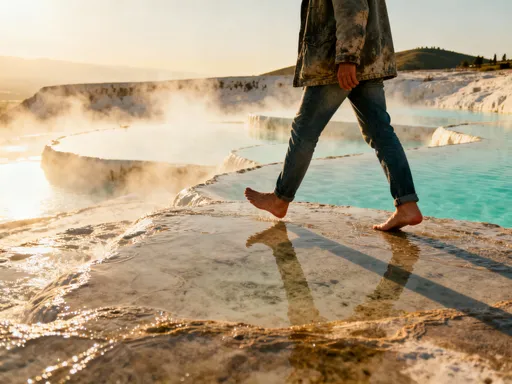
One of the most unique aspects of visiting Pamukkale is the experience of walking barefoot across the travertine terraces. The surface, though solid, has a soft, almost spongy texture underfoot—like walking on warm stone foam. This tactile sensation enhances the dreamlike quality of the place, reinforcing the feeling of stepping onto a natural sculpture. However, this experience comes with rules and realities that every visitor must respect. To protect the delicate travertine, footwear is strictly prohibited on the main terraces. Everyone must remove shoes before stepping onto the white slopes, and designated areas are provided for storage.
While the sensation is pleasant, foot care is essential. The surface, though soft, can be uneven and occasionally sharp in places where mineral deposits have cracked or eroded. Sandals or flip-flops are recommended for walking to and from the terraces, and some visitors choose to wear water socks for added comfort. Hydration is also important—especially in summer—since the sun reflects strongly off the white surface, increasing exposure. Carrying a hat, sunscreen, and a reusable water bottle is a wise precaution.
Timing your visit can dramatically affect your experience. Arriving early in the morning, ideally just after opening at 8:00 AM, allows you to enjoy the terraces before tour groups arrive. By mid-morning, especially in peak season, the site becomes crowded, and the lower pools fill quickly with visitors wading and photographing. Late afternoon offers a quieter alternative, with softer light and fewer people. Some travelers opt for a two-part visit—morning at Hierapolis and late afternoon at the terraces—to avoid congestion and capture golden-hour photos.
Conservation is a top priority at Pamukkale. The terraces are fragile, and even small disturbances can damage the slow-forming deposits. Visitors are required to stay on marked paths and avoid stepping on dry or cracked areas. Park rangers patrol regularly to enforce these rules, and fines are issued for violations. These measures are not arbitrary—they are necessary to preserve a natural wonder that takes decades to regenerate. By following guidelines, visitors contribute to the long-term survival of this irreplaceable site.
The Thermal Experience: Can You Still Bathe Like the Romans?
One of the most frequently asked questions about Pamukkale is whether you can still bathe in the thermal waters like the Romans once did. The answer is yes—but with limitations. The most famous option is the Cleopatra Pool, also known as the Antique Pool, located within the Hierapolis archaeological zone. According to legend, Mark Antony had this pool built for Cleopatra, though historians agree it predates her visit. What makes this pool extraordinary is that it is filled with warm, mineral-rich water and contains submerged Roman columns and ruins, creating a one-of-a-kind swimming experience.
The water temperature in the Cleopatra Pool averages around 36°C (97°F), making it comfortably warm year-round. It is rich in calcium, magnesium, and bicarbonate, minerals believed to have therapeutic effects on the skin and joints. While scientific evidence is limited, many visitors report feeling relaxed and rejuvenated after soaking. The experience of floating among ancient stone fragments, with sunlight filtering through the water, is undeniably magical. However, access is controlled—only a limited number of visitors are allowed in at a time, and a separate ticket is required in addition to the main park entrance fee.
Swimsuits are mandatory, and towels can be rented on-site. Waterproof phone cases are highly recommended, as many want to capture photos without risk. Lockers are available, though bringing minimal belongings is advised. While the pool is shallow in most areas, non-swimmers can still enjoy wading and sitting along the edges. Children are welcome, but supervision is essential due to the uneven submerged surfaces.
Is the Cleopatra Pool worth the extra cost and effort? For many, absolutely. It offers a rare blend of history, relaxation, and sensory delight. However, it’s important to manage expectations. This is not a private spa or a secluded retreat—it is a popular attraction, and during peak hours, it can feel crowded. The water, while clean, is not crystal clear due to mineral content. Some may find the experience more historical than luxurious. Still, for those seeking a tangible connection to the past, there are few places on Earth where you can literally swim among ruins.
Timing It Right: Best Seasons, Hours, and Crowd Management
Choosing the right time to visit Pamukkale can make the difference between an overwhelming experience and a serene one. The site is open year-round, but conditions vary significantly by season. Summer, from June to August, brings high temperatures—often exceeding 35°C (95°F)—and large crowds. While the warm weather makes wading pleasant, the heat can be exhausting, especially under direct sun. Midday visits should be avoided if possible, as the reflective surface intensifies UV exposure. Early morning or late afternoon visits are far more comfortable.
Spring (April to early June) and autumn (September to October) offer the most favorable conditions. Temperatures are mild, ranging from 20°C to 28°C (68°F to 82°F), and the skies are usually clear. These seasons also bring fewer tourists, allowing for a more peaceful exploration of both the terraces and Hierapolis. The soft light enhances photography, and the air carries a pleasant warmth without the summer harshness. For families and older visitors, these months provide the most enjoyable balance of comfort and accessibility.
Winter, from November to February, is the least crowded but also the most unpredictable. While temperatures can be cool—sometimes dropping below 10°C (50°F)—the site takes on a mystical quality when mist rises from the warm pools against a cold sky. On rare occasions, light frost or even snow dusts the white terraces, creating a breathtaking contrast. However, some pathways may become slippery, and the Cleopatra Pool may have limited access during colder periods. Still, for those who appreciate solitude and atmospheric beauty, winter can be a rewarding time to visit.
Within the day, timing is equally important. The site opens at 8:00 AM and closes at 7:00 PM in summer, 5:30 PM in winter. Arriving at opening time ensures the best chance of avoiding tour buses, which typically begin arriving around 10:00 AM. Many organized groups spend only a few hours at the site, leaving by early afternoon. A strategic approach is to visit the terraces early, explore Hierapolis mid-morning, have lunch at a local café, and return to the pools in the late afternoon for a second, quieter experience. This rhythm allows for rest, reflection, and a deeper connection with the landscape.
Beyond the Terraces: Hidden Corners and Local Encounters
While Pamukkale and Hierapolis are the main attractions, the surrounding region offers quieter, more personal experiences. Just a short drive away lies Karahayıt, a small village known for its “Red Springs.” The water here gets its distinctive pinkish hue from high iron content, and the pools are less regulated than Pamukkale, offering a more rustic thermal experience. Family-run bathhouses provide private and semi-private options, some with garden seating and traditional Turkish tea service. It’s a perfect spot for those seeking relaxation without the tourist bustle.
The local markets in Denizli and nearby towns also offer authentic cultural encounters. Handmade olive oil soaps, woven textiles, and ceramic goods reflect the region’s artisanal traditions. Vendors are often happy to share stories about their crafts, and prices are reasonable. Many visitors overlook these small interactions, but they add depth to the journey—reminding us that tourism is not just about seeing sights, but about connecting with people.
Local cafés and family-run restaurants serve traditional Anatolian dishes such as *testi kebabı* (clay pot kebab), *lahmacun* (thin crust with spiced meat), and fresh dairy products like *ayran* and *beyaz peynir*. Meals are often served on shaded patios with views of the countryside, offering a peaceful break from the day’s exploration. Supporting these small businesses not only enhances your experience but also contributes directly to the local economy.
Respectful tourism is key. This means dressing modestly when visiting villages, asking permission before photographing people, and being mindful of noise and waste. The people of this region have lived alongside these wonders for generations, and their daily lives continue beyond the tourist gaze. By engaging with humility and curiosity, visitors can leave not just with photos, but with meaningful memories and mutual respect.
Putting It All Together: A Realistic Yet Rewarding Visit
Planning a successful visit to Pamukkale requires more than just booking a ticket—it demands thoughtful preparation. Start with logistics: the nearest major city is Denizli, accessible by bus, car, or domestic flight. From there, local shuttles or taxis can take you to the site entrance. Allocate at least four to five hours to fully experience both the terraces and Hierapolis. Wear comfortable clothing, bring swimwear if using the Cleopatra Pool, and pack a light snack and water.
Footwear strategy is crucial. Wear sandals to the site, remove them at the designated area, and carry a small bag for storage. Water socks can prevent discomfort from rough spots. Sun protection—hat, sunglasses, sunscreen—is non-negotiable, especially in summer. While the site has cafes and rest areas, bringing your own water ensures hydration without relying on availability.
Be aware of common misconceptions. Some expect to swim freely across all terraces, but only designated areas allow wading, and swimming is restricted to the Cleopatra Pool. Others assume the site is entirely natural, forgetting the deep human history embedded in the ruins above. Understanding these realities sets realistic expectations and enriches the experience.
Ultimately, Pamukkale stays with you not because it is perfect, but because it is profound. It is a place where geology, history, and human longing intersect. The quiet awe it inspires comes not from spectacle alone, but from the sense of timelessness—of standing where emperors bathed, where waters have flowed for millennia, where nature continues its slow, patient work. This is not a filtered fantasy. It is real, fragile, and deeply moving.
Pamukkale isn’t just a destination; it’s a sensory journey through time, nature, and human ingenuity. When approached with preparation and respect, it delivers moments of rare clarity—where sky, stone, and water align in silent harmony. This is travel at its most grounding, reminding us that wonder still exists in the real world, no filters needed.