You Won’t Believe These Hidden Architectural Gems in Manama
Manama isn’t just a capital city—it’s a living canvas of contrasts. Where else can you step from sun-baked alleyways into gleaming towers that defy gravity? I didn’t expect to be so stunned by its architecture. From traditional coral houses to futuristic skyscrapers, every corner tells a story. If you think Bahrain is all desert and malls, think again. This is a city reinventing itself, one bold design at a time. Let’s dive into the structures that make Manama truly unforgettable.
First Impressions: Walking Into a City of Layers
Arriving in Manama, the first thing you notice is how time seems to fold in on itself. The city does not erase its past to make room for the new—it layers them, one upon the other, like pages in a well-worn book. As you step off the plane and into the warmth of Bahrain’s golden light, the skyline greets you with a blend of the ancient and the audacious. Traditional souqs with their arched entrances and weathered stone facades sit just blocks away from glass-clad towers that shimmer under the Gulf sun. The contrast is not jarring—it’s harmonious, intentional, and deeply revealing.
The sensory experience of walking through central Manama is rich and textured. Your fingers might brush against the rough, porous surface of a centuries-old coral wall in the old market district, only to be met moments later by the cool, seamless glass of a modern shopping complex. The air carries the scent of cardamom from a nearby coffee stall, mingling with the faint metallic tang of construction in the distance. Sunlight bounces off mirrored skyscrapers, casting long, dancing reflections on the pavement, while shaded alleyways offer relief beneath hand-carved wooden balconies. This interplay of light, material, and space sets the tone for what lies ahead—an architectural journey that is as much about feeling as it is about seeing.
What makes Manama’s skyline so compelling is not just its vertical ambition but its narrative depth. Each building, whether modest or monumental, contributes to a larger story of resilience, adaptation, and vision. The city’s physical form reflects its historical role as a crossroads of trade and culture, where Persian, Indian, Arab, and British influences have left their mark. Today, that legacy continues in the way architects and urban planners honor tradition while embracing innovation. For the observant traveler, the skyline is not just a postcard view—it’s an invitation to look closer, to question, and to discover.
The Heart of Tradition: Al Fateh Grand Mosque
At the center of Manama’s architectural soul stands the Al Fateh Grand Mosque, a monument that transcends its function as a place of worship to become a symbol of national identity. Completed in 1987, it is one of the largest mosques in the world, capable of accommodating over 7,000 worshippers at once. But its significance goes far beyond capacity. The mosque is a masterclass in Islamic architectural revival, blending grand scale with exquisite craftsmanship. Its most striking feature—the world’s largest precast concrete dome—rises 29 meters high and spans 35 meters in diameter, a feat of engineering that also serves as a powerful visual anchor in the city’s spiritual landscape.
The interior is nothing short of breathtaking. Under the vast dome, a single, handcrafted Persian carpet covers the entire prayer hall, its intricate patterns weaving together shades of red, blue, and gold. This carpet, weighing over 35 tons, was a gift from Iran and remains one of the largest in the world. The walls are clad in fine Italian marble, and chandeliers made of gilded brass and Czechoslovakian crystals hang from the ceiling, their light refracting softly across the polished surfaces. Natural light filters through stained-glass windows, casting colorful patterns that shift with the time of day, creating an atmosphere of serenity and reverence.
What makes Al Fateh particularly meaningful is its openness. Unlike many religious sites that are closed to non-worshippers, the mosque welcomes visitors of all backgrounds, offering guided tours that emphasize mutual understanding and cultural appreciation. This spirit of inclusion reflects Bahrain’s long-standing tradition of religious tolerance and interfaith dialogue. The mosque’s design, while deeply rooted in Islamic tradition, also incorporates modern materials and techniques, making it a bridge between centuries. For many visitors, standing beneath that soaring dome is not just an architectural experience—it’s a moment of quiet awe, a reminder of what human creativity and faith can achieve together.
Echoes of the Past: The Old City and Courtyard Houses
Just a short drive from the bustle of central Manama lies Muharraq, a historic island city that offers a window into Bahrain’s architectural heritage. Once the nation’s capital, Muharraq is home to some of the best-preserved traditional Bahraini homes, many of which have been carefully restored as part of UNESCO’s recognition of the Pearling Path, a World Heritage Site. These courtyard houses, built in the 18th and 19th centuries, were designed for both comfort and community, reflecting a way of life that prioritized shade, airflow, and family privacy in a harsh desert climate.
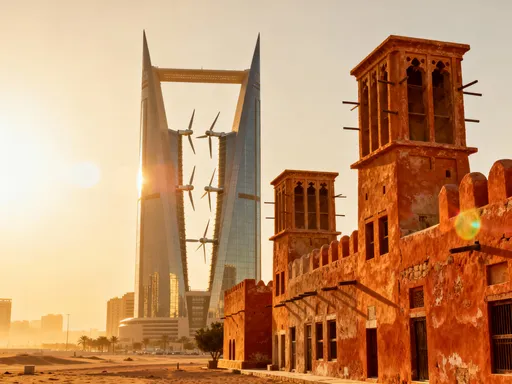
The architecture of these homes is both practical and poetic. Constructed from coral stone harvested from the sea and lime mortar, the thick walls provide natural insulation, keeping interiors cool even in the peak of summer. One of the most ingenious features is the wind tower, or barjeel, a vertical shaft that captures breezes from above and channels them down into the living spaces below. These towers, often adorned with intricate wooden latticework, are not only functional but also serve as striking visual elements that define the skyline of old Muharraq. Inside, rooms open onto a central courtyard, where a small fountain or date palm provides shade and a sense of tranquility.
Preservation efforts in Muharraq have transformed these historic homes into cultural hubs, cafes, and artisan workshops, ensuring that they remain part of daily life rather than frozen relics. Walking through the narrow, winding lanes, you might pass a restored house where a local potter demonstrates traditional techniques, or a courtyard now used for poetry readings and music performances. These adaptive reuse projects demonstrate how heritage can be both honored and revitalized. For visitors, especially those interested in sustainable design, these homes offer timeless lessons in passive cooling, natural materials, and community-centered planning—principles that are increasingly relevant in today’s urban environments.
Modern Marvels: The Bahrain World Trade Center
Rising from the Corniche like a pair of sailboats caught in a steady wind, the Bahrain World Trade Center (BWTC) is one of the most recognizable landmarks in the Gulf. Completed in 2008, this 50-story twin-tower complex is not just an icon of modernity—it is a pioneer in sustainable architecture. What sets it apart is the integration of three massive wind turbines, suspended between the towers at levels 22, 26, and 30. These turbines harness the natural wind currents funneled between the buildings, generating approximately 11% to 15% of the towers’ total energy needs—an impressive achievement for a commercial skyscraper in a region not traditionally associated with renewable energy.
The design, by South African architect Shaun Killa, was inspired by the traditional dhow sail, a nod to Bahrain’s maritime history. The towers are positioned at a slight angle to maximize wind capture, and their aerodynamic shape reduces wind resistance while enhancing turbine efficiency. The result is a structure that is as elegant as it is efficient, blending form and function in a way that few high-rises manage. At night, the turbines are illuminated, creating a dynamic light display that underscores the building’s role as a beacon of innovation.
Beyond its engineering feats, the BWTC symbolizes Bahrain’s forward-thinking approach to urban development. In a region where energy consumption is often high and sustainability initiatives can be slow to take hold, this building stands as a bold statement. It demonstrates that economic growth and environmental responsibility are not mutually exclusive. For visitors, a visit to the observation deck or a coffee at the lobby café offers more than just a view—it offers a glimpse into a future where cities can grow upward without sacrificing ecological balance. The BWTC is not just a place of business; it is a statement of values, written in steel and wind.
Art Meets Structure: The Beit Al Quran and Cultural Spaces
Amid the rhythm of urban life, Manama offers oases of reflection, none more profound than the Beit Al Quran, a museum and cultural center dedicated to the preservation and celebration of the Quran. Located in Hoora, this elegant complex houses one of the most important collections of Islamic manuscripts in the region, including a 7th-century Quran written on gazelle skin. But it is not only the contents that impress—it is the architecture itself, a quiet masterpiece of Islamic design that invites contemplation and peace.
The building’s exterior features traditional Islamic geometric patterns carved into white stone, while the central courtyard is anchored by a serene fountain surrounded by arched walkways. Inside, natural light filters through stained-glass windows depicting verses from the Quran, casting soft, colorful glows on the marble floors. The exhibition halls are arranged in a circular layout, guiding visitors on a journey through the history of Quranic transcription, calligraphy, and illumination. Every detail—from the hand-painted ceilings to the custom-made display cases—reflects a deep respect for the sacred texts on display.
What makes Beit Al Quran particularly special is its atmosphere. Unlike many museums that feel clinical or overly curated, this space feels alive with reverence and purpose. It is not uncommon to see visitors sitting quietly in the courtyard, reading or simply absorbing the calm. The center also hosts lectures, calligraphy workshops, and interfaith dialogues, reinforcing its role as a living cultural institution. In a city that is constantly evolving, Beit Al Quran stands as a reminder that progress does not require the erasure of tradition. Instead, it shows how art, faith, and architecture can come together to create spaces that nourish both the mind and the spirit.
Urban Transformation: The Waterfront and Diplomatic Area
Along the eastern edge of Manama, the coastline has been reimagined as a vibrant urban waterfront, a district where modern living, leisure, and design converge. The Diplomatic Area, once a quiet residential zone, has transformed into a dynamic neighborhood of high-rise apartments, luxury hotels, and open promenades. Here, the city’s ambition is on full display—glass towers reflect the turquoise waters of the Arabian Gulf, while landscaped parks and pedestrian paths invite residents and visitors alike to slow down and enjoy the sea breeze.
What sets this area apart is its commitment to mixed-use development. Unlike some modern districts that feel sterile or exclusive, Manama’s waterfront blends private and public spaces with thoughtful balance. Cafes with outdoor seating line the promenade, offering views of the Bahrain Bay skyline and the iconic Bahrain Financial Harbour. Children play in shaded playgrounds, couples stroll hand in hand, and joggers follow the coastal path at sunrise. The area is also home to several international embassies and corporate headquarters, yet it never feels closed off or inaccessible. Instead, it functions as a shared urban living room—a place where different parts of society intersect.
The architectural language here is contemporary but not cold. Buildings feature curved facades, vertical gardens, and shaded terraces that respond to the local climate. Many incorporate energy-efficient glazing and solar shading devices, reducing heat gain while maximizing natural light. Public art installations dot the landscape, from abstract sculptures to engraved stone benches with poetic inscriptions. This attention to detail ensures that the area is not just functional but emotionally resonant. For families, especially women who value safe, welcoming public spaces, the waterfront offers a rare combination of beauty, comfort, and accessibility—a model of what modern city life can be.
Why Architecture Tells Manama’s True Story
More than any museum or guidebook, Manama’s architecture reveals the true character of Bahrain. It is a city that refuses to choose between past and future, between tradition and innovation. Instead, it weaves them together, creating a built environment that is as layered as its history. Each structure—whether a centuries-old courtyard house or a wind-powered skyscraper—carries meaning. They are not just places to live, work, or worship; they are expressions of identity, resilience, and hope.
The city’s architectural diversity reflects its broader social values: openness, adaptability, and a quiet confidence in its own path. In a world where many capitals rush to erase their histories in favor of glass and steel, Manama chooses a different route. It restores coral houses while building sustainable towers. It honors religious heritage while embracing interfaith dialogue. It creates luxury developments that still welcome the public. This balance is not accidental—it is intentional, the result of careful planning and a deep respect for context.
For travelers, especially women who seek meaningful, enriching experiences, Manama offers a powerful lesson. The best destinations do not just show you something new—they help you see differently. They challenge assumptions, like the idea that the Gulf is only about oil and opulence, or that tradition and modernity must be at odds. By walking through its streets, standing beneath its domes, and feeling the breeze in its wind towers, you begin to understand Bahrain not as a place on a map, but as a living story—one written in stone, light, and space.
Manama’s architecture is more than aesthetics—it’s a dialogue between past and future. Each building, whether ancient or avant-garde, invites us to understand Bahrain on a deeper level. For travelers seeking meaning in the places they visit, this city offers a powerful lesson: the best destinations don’t just show you something new—they help you see differently.