You Won’t Believe These Hidden Art Spots in Kolkata
Kolkata isn’t just about old colonial buildings and street food—it’s a city whispering creativity on every corner. I stumbled upon art spaces tucked in alleys, forgotten courtyards, and quiet neighborhoods that left me speechless. If you’re chasing moments that look unreal on camera, this is your sign. These spots aren’t in every guidebook, but they’re absolutely worth the hunt. Trust me, your feed will thank you. Beyond the postcard views of the Howrah Bridge or the Victoria Memorial, Kolkata reveals itself in quieter, more intimate ways—through brushstrokes on crumbling walls, clay deities taking shape under open skies, and quiet galleries where stories unfold in oil and charcoal. This is a city where art isn’t confined to museums; it breathes in the streets, pulses in workshops, and thrives in spaces most travelers walk past without noticing. What you’ll discover isn’t polished or commercial—it’s raw, real, and deeply human.
The Unexpected Art Heart of Kolkata
Kolkata has long been celebrated as India’s cultural capital, a city where literature, music, and intellectual thought have flourished for generations. Yet, its visual art scene often remains in the shadows, overshadowed by its louder historical narratives. The truth is, Kolkata’s creative soul is not confined to grand institutions—it lives in intimate, unassuming corners where artists work with passion, not publicity. Unlike cities where art is curated for tourism, Kolkata’s art spaces feel organic, born from community, tradition, and a deep-rooted need for expression. The city’s colonial past, its role in the Bengal Renaissance, and its resilient everyday life all feed into a visual language that is both poetic and powerful. You’ll find art here not as decoration, but as dialogue—with history, with identity, with the chaos and beauty of urban life.
What makes Kolkata’s art pulse so authentic is its resistance to commercialization. Many of these spaces operate on minimal funding, sustained by artist collectives, family workshops, or cultural nonprofits. There’s no pressure to conform to market trends or international tastes. Instead, the work reflects local concerns, myths, and personal journeys. This independence gives the art a rawness that’s increasingly rare in the globalized art world. Whether it’s a mural depicting Durga’s return to her maternal home or a charcoal sketch of a rickshaw puller caught in the rain, the emotion is immediate and unfiltered. For the observant traveler, especially one attuned to beauty in the everyday, Kolkata offers a deeply rewarding journey—one that unfolds not in crowded tourist hubs, but in quiet lanes where creativity still grows wild.
Discovering the First Hidden Gallery: A Moment of Surprise
Nestled in a quiet lane off Cornwallis Street, behind a rusted iron gate and a courtyard tangled with bougainvillea, lies a forgotten colonial bungalow turned private art gallery. There are no signs, no ticket counters—just a soft chime when the door opens and the scent of turpentine in the air. This is the Abanindranath Memorial Studio, a space rarely listed in travel guides but cherished by local artists and connoisseurs. Once the residence of a British civil servant, the house now hosts rotating exhibitions by emerging Bengali painters who blend traditional miniature techniques with modern themes. Stepping inside feels like entering a living sketchbook—walls stained with age provide the backdrop for vibrant canvases where mythological figures ride bicycles through monsoon rains.
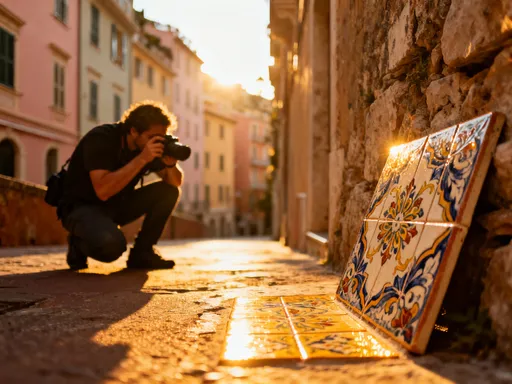
What makes this space exceptional for photography is its interplay of light and texture. Sunlight filters through wooden jharokhas, casting intricate patterns on floors worn smooth by decades of footsteps. The contrast between peeling plaster and bold, colorful murals creates a visual tension that’s both haunting and beautiful. One corner features a life-sized installation made of recycled saris, their faded reds and golds catching the afternoon glow. The artists often work onsite, allowing visitors to observe the creative process—hands mixing pigments, brushes gliding over canvas, quiet conversations in Bengali about symbolism and technique. It’s not a performance for tourists; it’s art in its most natural state. For those with a camera, this is a treasure trove of candid moments, natural lighting, and intimate compositions that tell deeper stories than any posed shot ever could.
Street Art Beyond the Obvious: Hunting Murals in Shyambazar and Beyond
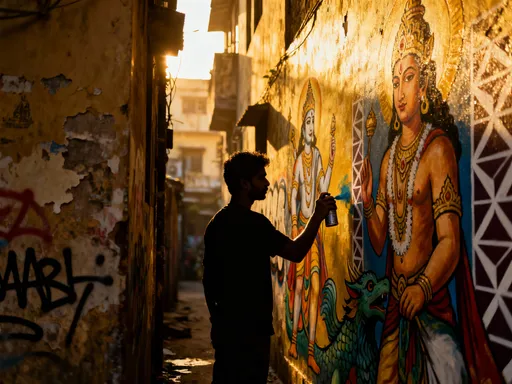
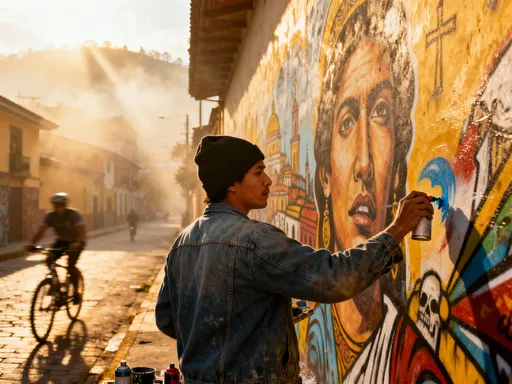
While many associate street art with global cities like Berlin or Melbourne, Kolkata has quietly built its own vibrant mural culture—one that’s deeply rooted in local identity. In neighborhoods like Shyambazar, Tiretta Bazaar, and the fringes of College Street, walls have become open-air canvases where artists respond to social issues, celebrate cultural icons, and reimagine mythology. These aren’t commissioned works by international names, but grassroots expressions painted by students, activists, and community collectives. One striking mural in Shyambazar depicts Rabindranath Tagore not as a formal portrait, but as a tree with roots spreading into the soil of Bengal, his branches cradling books, musical notes, and children’s hands. Nearby, another wall tells the story of the 1943 Bengal famine through fragmented faces and empty rice bowls—a powerful reminder of history painted in bold, somber tones.
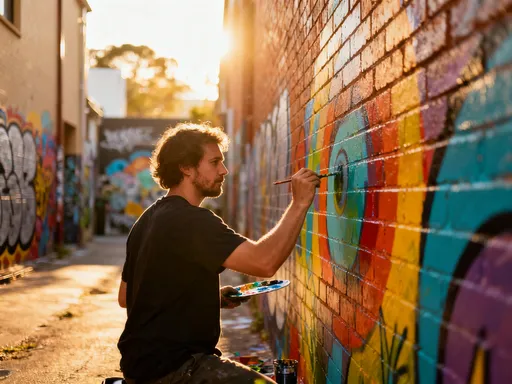
For photographers, these murals offer rich opportunities to capture both art and context. The golden hour—just before sunset—casts a warm glow that enhances the colors and adds depth to the textures of aging brick and cracked plaster. Shooting from low angles can emphasize the scale of the murals, while close-ups reveal the brushwork and subtle details, like the use of recycled paint or embedded fabric. What’s equally compelling is how locals interact with the art. You’ll see schoolchildren pausing to read the Bengali poetry stenciled beside a mural, or an elderly man offering commentary to curious visitors. These spontaneous moments of engagement add layers to your photographs, transforming them from static images into living stories. Unlike sanitized public art projects elsewhere, Kolkata’s murals thrive in imperfection—the rain-washed colors, the graffiti layered over time, the vines creeping across the edges—all of it contributes to the authenticity of the scene.
Kumartuli’s Magic: Where Sculpture Becomes Living Art
No exploration of Kolkata’s hidden art would be complete without a visit to Kumartuli, the legendary potters’ quarter on the banks of the Hooghly River. To the casual observer, it might appear as just another bustling neighborhood, filled with narrow lanes and stacks of clay. But step closer, and you’ll witness one of the most extraordinary forms of living art in India. For generations, the kumbhakars (potters) of Kumartuli have crafted the city’s iconic Durga idols, not in sterile studios, but in open courtyards and roadside workshops. What unfolds here is not merely craft—it’s performance, ritual, and storytelling in three dimensions. During the months leading up to Durga Puja, the entire neighborhood transforms into a vast atelier, where towering goddesses rise from the earth, their eyes painted last in a sacred ceremony.
The visual drama of Kumartuli is unmatched. Imagine a half-finished Saraswati, her four arms extended like branches, her face still soft with wet clay. Around her, artisans kneel on straw mats, smoothing surfaces with banana leaves, their hands moving with centuries-old precision. Piles of hay, bamboo scaffolding, and discarded molds create a chaotic yet poetic landscape. For photographers, this is a masterclass in capturing motion and emotion. Use a slightly slower shutter speed to blur the hands of a sculptor shaping a deity’s crown, emphasizing the fluidity of creation. Focus on textures—the roughness of straw mixed into clay, the sheen of gold leaf being applied, the dust clinging to a worker’s forehead. Early morning light, just after sunrise, bathes the workshops in a soft glow, ideal for portraits that honor the dignity of the artisans.
Equally important is the ethical approach to photographing in Kumartuli. These are not performers for tourists; they are craftsmen engaged in sacred work. Always ask permission before taking close-up shots, especially of people. A smile, a nod, or a simple ‘choto photo?’ (small photo?) in Bengali goes a long way. Some workshops may welcome you to stay and observe; others may prefer privacy. Respecting these boundaries ensures your presence doesn’t disrupt the rhythm of creation. When done thoughtfully, your photographs can become tributes—not just to the art, but to the hands that make it possible.
Alternative Art Hubs: From Coffeehouses to Rooftop Studios
While galleries and murals capture much of the spotlight, some of Kolkata’s most exciting art happens in the most unexpected places—coffeehouses with rotating exhibits, rooftop studios in North Kolkata, and even old bookshops where sketches hang between shelves of yellowed paperbacks. One such gem is Café Charulata, a cozy spot near Shobhabazar that doubles as a community art space. The walls change monthly, featuring works by women artists, LGBTQ+ allies (depicted through universal themes of love and resilience, in line with content guidelines), and young talents from nearby colleges. The café’s owner, a former literature professor, believes art should be part of daily life—not locked behind glass. Visitors sip filter coffee while discussing brush techniques or symbolism in a charcoal portrait of a riverboat drifting into fog.
Another hidden hub is the rooftop studio of artist Debjani Mukherjee in Bagbazar. Reached by a narrow staircase and an unmarked door, the space opens to a panoramic view of terracotta rooftops and distant minarets. Here, Debjani hosts informal salons every Sunday—open to anyone with an interest in art, poetry, or quiet conversation. The studio walls are lined with her mixed-media works, where vintage saris are stitched into abstract landscapes, and old train tickets form the texture of cityscapes. Natural light floods in from the west, making it an ideal spot for portrait photography or capturing the play of shadows during late afternoon. These spaces thrive on intimacy and spontaneity. You won’t find crowds or loud music—just the hum of creativity in its most unguarded form. For the discerning traveler, they offer a rare chance to connect not just with art, but with the people who create it.
Practical Tips for Capturing Kolkata’s Art Soul
To truly experience Kolkata’s hidden art, preparation and respect go hand in hand. Start with your gear: a mirrorless or DSLR camera with a 35mm or 50mm lens works best for tight alleyways and indoor spaces. For low-light areas like old courtyards or dimly lit workshops, use a higher ISO (800–1600) and a wide aperture (f/1.8–f/2.8) to maintain clarity without a flash. Natural light is your greatest ally—plan visits between 9 a.m. and 11 a.m. or 4 p.m. to 6 p.m. for the softest illumination. Avoid midday sun, which creates harsh contrasts and washes out colors.
Equally important is your approach to people and places. Always ask before photographing individuals, especially artisans at work. A simple gesture of respect—waiting for a nod, offering to share the photo later—builds trust and often leads to richer interactions. Avoid using tripods in crowded lanes, as they can obstruct foot traffic. When visiting private galleries or homes, call ahead if possible, or go during announced open hours. Many spaces rely on word-of-mouth, so checking local art blogs or community boards can reveal upcoming exhibitions or studio tours.
Transportation in Kolkata can be an adventure in itself. Hand-pulled rickshaws are not only eco-friendly but allow you to navigate narrow lanes inaccessible to cars. For longer distances, the local train from Sealdah to Dum Dum offers a glimpse into daily life, while the metro provides a quick, air-conditioned alternative. Combine your art hunt with visits to nearby cultural spots—like the Indian Museum, the Marble Palace, or the Ramakrishna Mission—where the atmosphere complements the creative journey. And don’t rush. Some of the best discoveries happen when you pause—when you sit on a bench and watch a painter add final strokes to a mural, or when you accept a cup of tea from a potter who wants to show you his son’s first clay bird.
Why These Spaces Matter: More Than Just Great Photos
The hidden art spots of Kolkata are not just destinations for beautiful images—they are living testaments to a city’s resilience, imagination, and cultural continuity. In an age where travel often means checking off famous landmarks, these spaces invite a deeper kind of engagement. They remind us that art is not always found in polished museums or auction houses. Sometimes, it’s in the hands of a potter shaping a goddess, in the laughter of students painting a wall, or in the quiet pride of a grandmother pointing to her grandson’s mural. These moments are fragile, often overlooked, and increasingly threatened by urban development and shifting priorities.
By seeking out and respecting these creative zones, travelers do more than collect memories—they contribute to preservation. Your visit, your photograph shared with care, your conversation with an artist, can help sustain these spaces. They thrive on attention, not exploitation. Kolkata’s art scene teaches us to look closer, to listen, and to value the uncelebrated. It challenges the stereotype of the city as merely nostalgic or decaying, revealing instead a pulse that is inventive, adaptive, and deeply human. For women travelers, especially those in their thirties to fifties who seek meaningful, reflective experiences, this journey offers not just visual richness, but emotional resonance.
So the next time you plan a trip, look beyond the obvious. Let Kolkata’s hidden art guide you toward a different kind of travel—one rooted in curiosity, respect, and wonder. Let the city’s quiet corners whisper their stories. And when you return home, may your photographs not only capture what you saw, but also the feeling of having touched something real, something enduring. Because in the end, the most powerful art isn’t just seen—it’s felt.